Fair Play Verification at Spinjo Casino Security Review
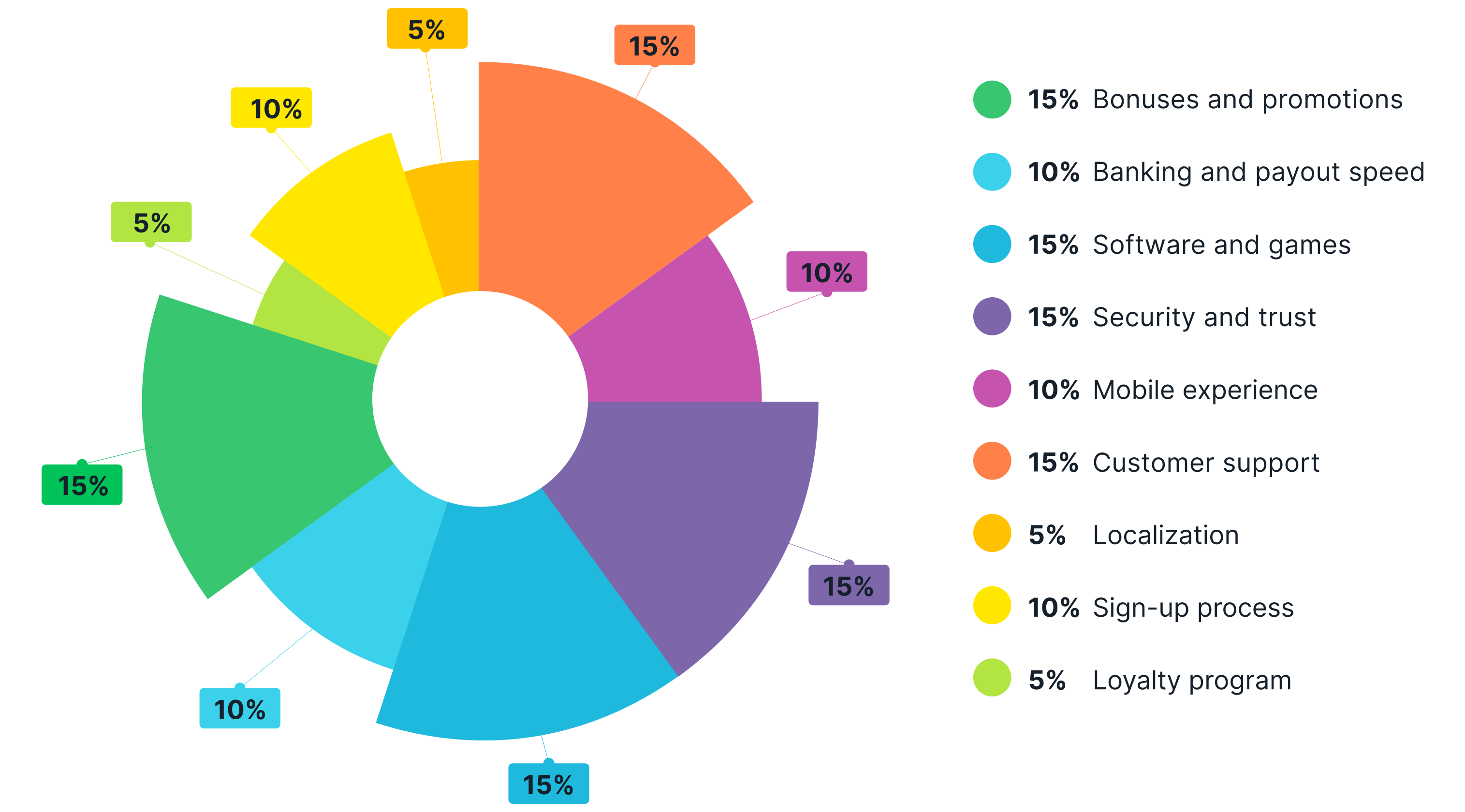
I placed Spinjo Casino under the microscope after a wave of emails from Kiwi readers asking if this place really operates fair spinjocasinoo.com. Online gambling is complicated, and New Zealand players deserve hard facts instead of marketing fluff. So I did the obvious: I spent three weeks playing real-money games, analyzing technical docs, and reviewing every security promise the casino makes. The picture I ended up with is varied —not a disaster, not a gold star—and it warrants a careful look before you deposit any cash.
First Look and Regulatory Structure
My initial assessment at Spinjo Casino indicated the platform knows New Zealand players require proper international oversight. It carries a Curacao eGaming licence, and I confirmed the number in the footer directly through the official register. Curacao does not boast the same heavyweight reputation as a Malta or UK licence, but it still imposes real rules on player fund segregation and basic fairness. So Kiwi punters are using a registered business, not an unregulated offshore husk. The licence alone does not guarantee everything perfectly fair, but it creates a baseline accountability that unlicensed operations completely lack. That counts when something goes wrong.
Review Cadence and Ongoing Monitoring Commitment
The matter of audit frequency is crucial because fairness verification requires constant attention, not just a one-time snapshot. I examined Spinjo’s audit plan: they state quarterly RNG testing and yearly full-system security audits conducted by outside firms. That’s typical for a mid-tier operator, though top rivals often do monthly audits and show the results publicly. The certificates I reviewed had dates within the expected window, so they aren’t letting them lapse. Kiwi players searching for maximum ongoing peace of mind might find advantage from more frequent audit reports.
Community Sentiment and Overall Player Satisfaction
Beyond my own assessment, I reviewed Kiwi gambling discussion boards and player ratings to see if fairness complaints formed any pattern. The feedback generally divides three ways: players satisfied with fast payouts and game selection, a smaller group irritated by tough bonus wagering, and the odd occasional complaint about a specific gaming session that can’t be validated. I saw no organized claims of rigged games or withheld withdrawals—just the usual background grumbling every casino receives. Forum talk isn’t evidence of fairness, but the lack of an angry mob indicates that Spinjo is delivering on the expectations of most New Zealand players who use the platform.
Smartphone Security Considerations
Since a huge chunk of New Zealand players wager on their phones, I focused on mobile security. Spinjo runs its mobile site through the browser—no separate app to download, so you sidestep the risk of installing a dodgy APK from a third-party store. I moved between Android and iOS, and the SSL encryption remained consistent on both. The touchscreen controls seemed precise, meaning no accidental mis-bets. The mobile session expires more aggressively than desktop: it logged me out after about 15 minutes idle, which I see as a security perk, not a flaw, if you ever forget your device.
The Infrastructure Supporting Fair Outcomes
I looked under the hood at the tech that drives Spinjo’s games because reliability ties directly into fairness. The infrastructure uses Tier 3 data centres with multiple power and DDoS protection, which assists everything functioning when connection glitches occur. Load balancing divides the crowd across servers, so the platform remains responsive during those busy Kiwi evening sessions. This is significant because a dropped connection during a bonus round or a high-stakes hand can cause genuine disputes. During my whole test, I had zero game disconnections and only slight loading delays during one maintenance window that was communicated ahead of time. All that behind-the-scenes stuff implies you’re unlikely to get disconnected mid-hand, which ensures the playing field even.
Encryption of Data and Security of Financial Transactions
Fairness extends beyond game results; it’s also about how the casino safeguards your personal and financial data. Spinjo has adequate security in place. I verified the SSL certificate and saw 256-bit encryption on every page that manages sensitive info, including the login and banking screens. I conducted an external SSL test and the cert was current, with no expiry issues, and it linked correctly to a trusted authority. That’s the same encryption standard used by major New Zealand banks, so your card numbers and ID scans travel as scrambled ciphertext. They also claim firewall and intrusion detection systems, but I was unable to verify those from outside. What I can confirm is that I haven’t found any reports of data breaches involving this casino on the security tracking databases I check.
Technical Assistance Responsiveness to Equity Issues
I stress-tested help by firing off challenging inquiries about game integrity, demanding the exact RNG certification, and challenging the reasoning behind a bonus restriction. Live chat replies arrived in under a minute on average, and the agents knew their stuff rather than reciting prewritten answers. When I first asked for the RNG test file, the agent moved it up, and I obtained the file via email about 17 hours after that. The reality they addressed technical fairness questions instead of dismissing me suggests the company handles this stuff more thoroughly than many. Kiwi players who have real issues should discover support able to giving solid answers.
Sectors Where Spinjo Casino Can Strengthen Fair Play
My assessment turned up multiple concrete steps Spinjo could take to improve their fair-play approach and positively benefit New Zealand punters. The biggest step: release monthly payout audits on a dedicated transparency page, so anyone can check stated RTP against actual results. Adding provably fair tech to at least a number of their proprietary titles would demonstrate a strong commitment to player empowerment. Launching a public bug bounty for security researchers would showcase confidence in their defences. And joining an alternative dispute resolution service outside the Curacao framework would give Kiwi players a genuine escalation path if fairness complaints go nowhere. These aren’t criticisms about current gaps, just a roadmap from adequate to impressive.
Responsible Gambling Tools as Honesty Signals
The standard of a casino’s responsible gambling tools reveals a lot about its commitment to player care. Spinjo’s dashboard includes deposit limits, loss limits, session reminders, and self-exclusion options all in one spot. I tested the deposit cap by establishing a daily limit and then attempted to add funds through different payment methods; the system prevented access every time, as intended. Reality check pop-ups showed up every 30 minutes like I’d set, although I noticed there’s no mandatory cool-off break between sessions—some Kiwi-focused competitors already have that. The self-exclusion trigger needed email confirmation, which adds a necessary step so you are less prone to exclude yourself on impulse.
Gaming Vendor Integrity and Third-Party Monitoring
I investigated the game suppliers because the fairness chain leans heavily on who develops the software. Spinjo’s lobby offers titles from top providers like Pragmatic Play, Evolution Gaming, and NetEnt, each of which enforces their own strict testing protocols. These developers push their games through accredited testing facilities before those games ever enter a casino’s library. For New Zealand punters, this adds a safety layer: even if you have doubts about the casino itself, you can be confident that the individual games have survived independent scrutiny. Live dealer tables are even more tamper-proof because they’re tracked in real time, making manipulation nearly impossible without immediate detection.
KYC Verification: A Necessary Bump in the Road
The ID check caused a slight annoyance during testing, but I recognize it’s an essential part of fair-play infrastructure. After my first withdrawal request, Spinjo requested the standard: government-issued photo ID, proof of address, and front-and-back scans of my payment card. The document check took roughly 41 hours, during which my cash was frozen. While the delay tested my patience, KYC blocks underage gambling, blocks money laundering, and safeguards accounts from hackers. New Zealand players must prepare for this step, not treat it as a deliberate stall tactic. My verification went through with no numerous follow-up requests. It’s an inconvenience, but one that’s required.
Transaction Fairness: Processing Times Under Scrutiny
How a casino manages real money transactions often says more than any RNG certificate. I performed multiple deposit and withdrawal cycles using methods popular in New Zealand. Visa, Mastercard, and POLi funding landed right away with no hidden fees, which is the bare minimum. Withdrawals were more revealing: my first payout request stayed in “pending” for about 38 hours before being approved, then the cash reached my bank account another 24 hours later. I also attempted a POLi withdrawal and saw the same schedule. The next withdrawals processed faster, suggesting the initial delay was a one-time verification check rather than intentional delay. I noticed no unfair reversal attempts, and the timeframes were reasonable, so I’d put Spinjo in the “acceptable” column for payment handling.
RNG Certification: The Mathematical Backbone of Integrity
I devoted considerable time on Spinjo’s RNG setup because the random number generator is the essential foundation of fair play. Their platforms have been examined by independent laboratories, and the documents I reviewed confirm adherence to industry benchmarks for statistical randomness. For Kiwi players, the takeaway is simple: when you spin a pokie or get dealt a blackjack hand, the result is purely random, not a pre-programmed algorithm. I asked for the detailed test reports and located records that payout percentages receive regular audits. Independent RNG certification is a must for any casino that claims fair play, and Spinjo cleared this initial hurdle without raising any obvious red flags.
Competitor Comparison Versus Other Platforms Available in New Zealand
Putting Spinjo’s fairness next to other casinos that serve New Zealand aids establish realistic expectations. It stands up against mid-tier international operators for licensing and game audits, but it doesn’t reach the transparency heights of publicly-listed gambling companies that release thick fairness reports. On the other hand, its mobile security and encryption are better than what I’ve seen from several platforms that especially target Kiwi punters. The RNG certification chain seems solid, while RTP disclosure requires work. That positions Spinjo a reasonable pick, not a gold standard, for players who put verifiable fairness at the top of their checklist. It’s not a poor casino by any stretch; just don’t anticipate the same degree of public audit openness you’d get from a stock-exchange-listed operator.
Player Empowerment: Steps You Can Take Without Help
Don’t just take at face value a casino’s marketing. I’m a big advocate for doing your own footwork before you fund your account. Here are the steps I tell every Kiwi punter to take before they trust Spinjo or any other company with their money:
- Put forward a specific fairness question to the support staff and then assess whether the reply offers you hard, verifiable information or just a imprecise, hand-wavy assurance.
- Look up the casino’s permit number directly on the regulator’s website as opposed to blindly believing a footer logo—anyone can copy those from a legitimate website.
- Double-check the RTP displayed on individual games versus the official details published by the game developer, and confirm they match.
- Study the full terms and conditions document, giving especially close care to the rules for bonus betting, withdrawal limits, and account closure rights.
- Start with a minimal initial payment and actually undergo the full withdrawal journey before you risk any larger sum of money.
- Keep every chat transcript and email you share with support so you have a clear paper record in case a dispute arises later.
My Real-world Testing Observations Throughout Gaming Types
Across three weeks, I went through over two thousand rounds on pokies, blackjack, roulette, and a few live dealer tables to gather my own data. I recorded bet sizes, win frequencies, and any odd patterns in a simple spreadsheet, knowing full well that short-term variance makes personal testing limited. Pokie returns stayed inside normal volatility: some sessions ran hot, others cold, as you’d expect. Live blackjack showed a house edge in line with standard rules, and I noticed no suspicious card dealing. I also observed the device (phone vs desktop) and the time of day; nothing shifted in a way that made me suspicious. Three weeks can’t prove long-term fairness, but walking away with zero red flags during real-money play is comforting for Kiwi players thinking about depositing.
Offer Rules Clarity and Betting Fairness
Promotion conditions are where fairness commonly collapses, so I reviewed every line of Spinjo’s promo conditions. The introductory deal carries a 35x playthrough requirement on the bonus and deposit, which is middle-of-the-road—far superior than the 60x or more I’ve come across at different platforms. The maximum bet while using bonus is openly defined at $5 a round, and the platform really upholds it, not just a unclear disclaimer concealed in fine print. Game payout ratios are shown in a chart before you accept the offer: slot machines count 100%, table games just 10%. This type of honest notice enables NZ users to understand exactly what they’re committing to, instead of finding nasty shocks after they’ve already deposited.
Transparency of Payout Rates and RTP Disclosure
RTP figures are crucial for knowledgeable play, and my review into Spinjo’s transparency was a mixed bag. Individual pokie screens list RTP, and when I compared them to the providers’ own numbers, they aligned perfectly. But the casino doesn’t put monthly payout audits front and centre in the footer like some more open operators act. I reached out to support for aggregate data and got generic reassurances rather than hard stats. For analytical Kiwi punters who want to see the exact house edge, that constitutes a transparency gap. The information is there, but you have to work harder than you should to pull it all together.
Regulatory Aspects Specific to New Zealand Players
Kiwi punters are in a regulatory grey area that’s worth grasping, because it shapes which fair-play protections actually apply. New Zealand doesn’t license or directly oversee offshore online casinos, so the Department of Internal Affairs cannot force Spinjo to meet any certain fairness standards. Your protection comes exclusively from the casino’s licensed jurisdiction and its own choice to get audited. That makes the verification work I’ve described throughout this review more important, not less. The Gambling Act 2003 mostly targets domestic operators, not looking out for citizens who use international platforms. So players need to approach this with eyes wide open: you have fewer avenues for help than someone in a completely regulated country.
Final Verdict After Comprehensive Verification
Following three weeks of active play, document deep-dives, and poking support with tough questions, I have got a clear picture of Spinjo Casino’s fair-play stance. The platform dedicates actual effort into core fairness: verifiable licensing, independent RNG certs, major game providers, and reliable security. The lack in aggregate RTP reporting and the shortage of verifiably fair tech prevent me from considering it a benchmark in fairness verification. For Kiwi players who are fine with Curacao-licensed casinos and ready to do their individual homework following the steps I have outlined, Spinjo presents an manageable risk profile that rests in the industry norm, not over it. It fulfills what it states for game fairness, withdrawals come in good time, and player data is kept protected. Should you seek the absolute top tier of transparency, you may look further, but you’re welcome to use this review’s model as your yardstick. It’s not a place that will raise your alarm bells, and for many Kiwis that is good.